






“False Rhenium, Real Germanium”: A New Risk in Gold Manufacturing
2025-11-25
 3805 138
Case Overview
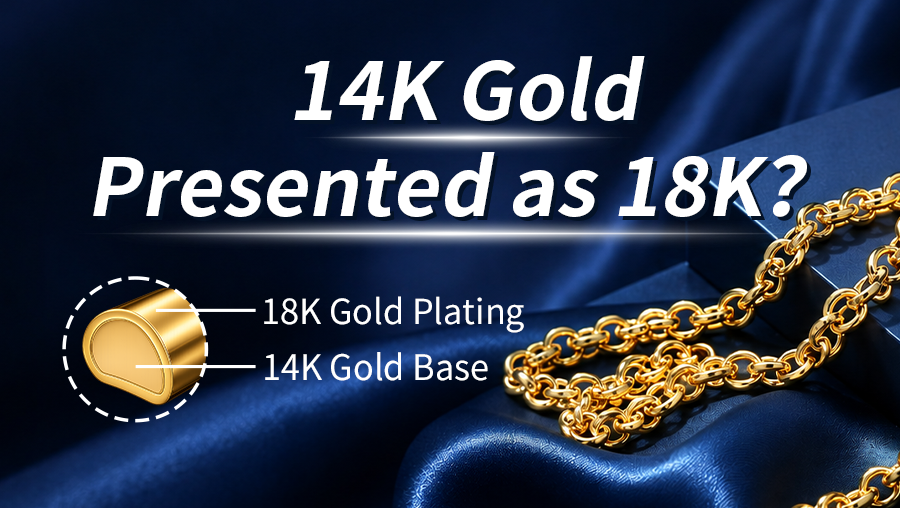
Recently, cases of lower-karat gold being sold as higher-karat gold have become increasingly common in jewelry markets across China and Southeast Asia. In gold alloys, "K" indicates gold purity: 18K gold contains approximately 75% gold, and 14K gold contains approximately 58.5%. Some jewelry labeled as 18K gold has been found to have an 18K gold surface layer, while the underlying material is actually 14K gold.
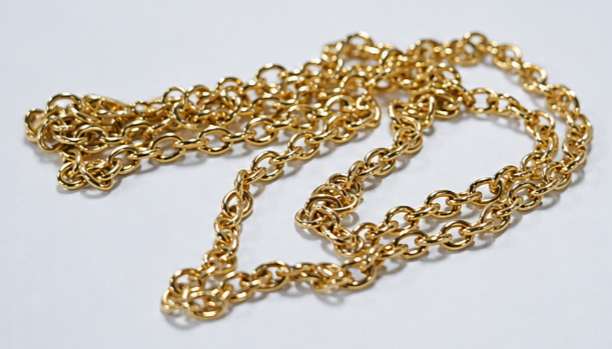
In one recent case, a customer submitted a K-gold necklace for analysis to verify its actual structure and gold content. The necklace chain was relatively fine, and its surface color and luster matched the typical appearance of 18K gold. However, visual inspection alone could not determine whether lower-karat gold was being presented as 18K gold.
Initial Testing
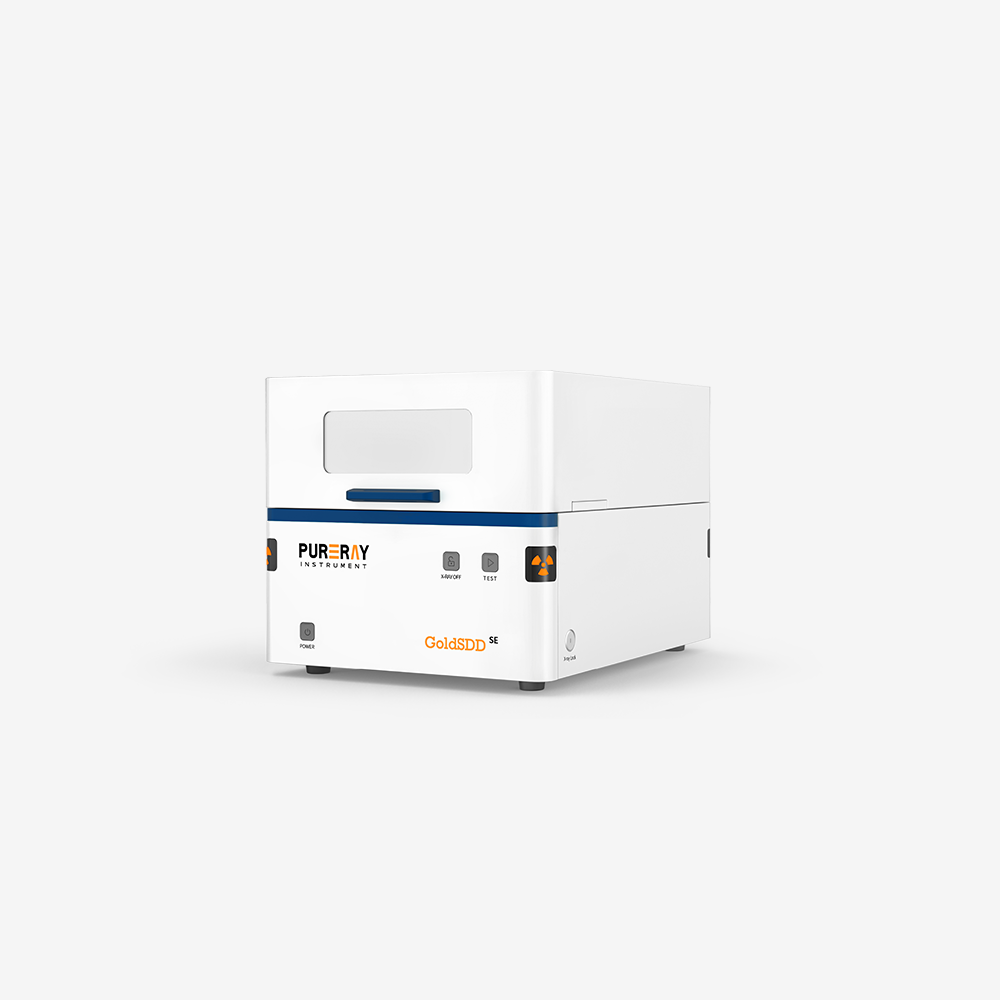
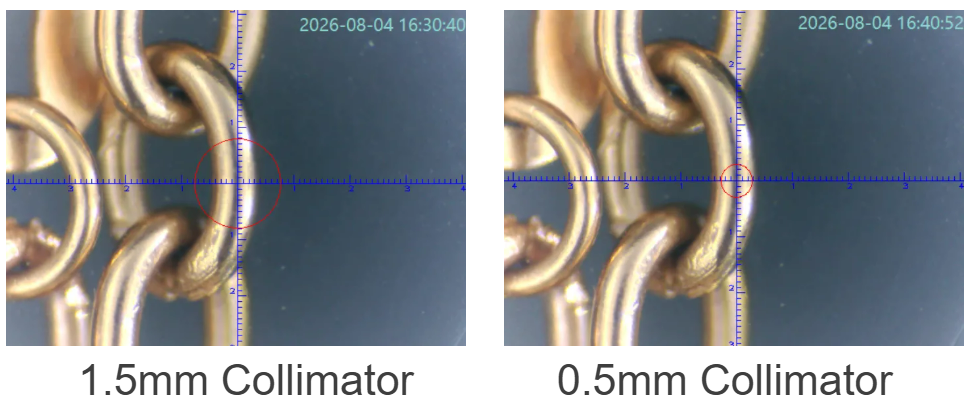
We first used the Pro, a multifunctional XRF analyzer, to conduct an initial elemental analysis of the sample. Because the necklace chain consisted of fine links, we reduced the X-ray spot size to 0.5mm for more precise analysis.
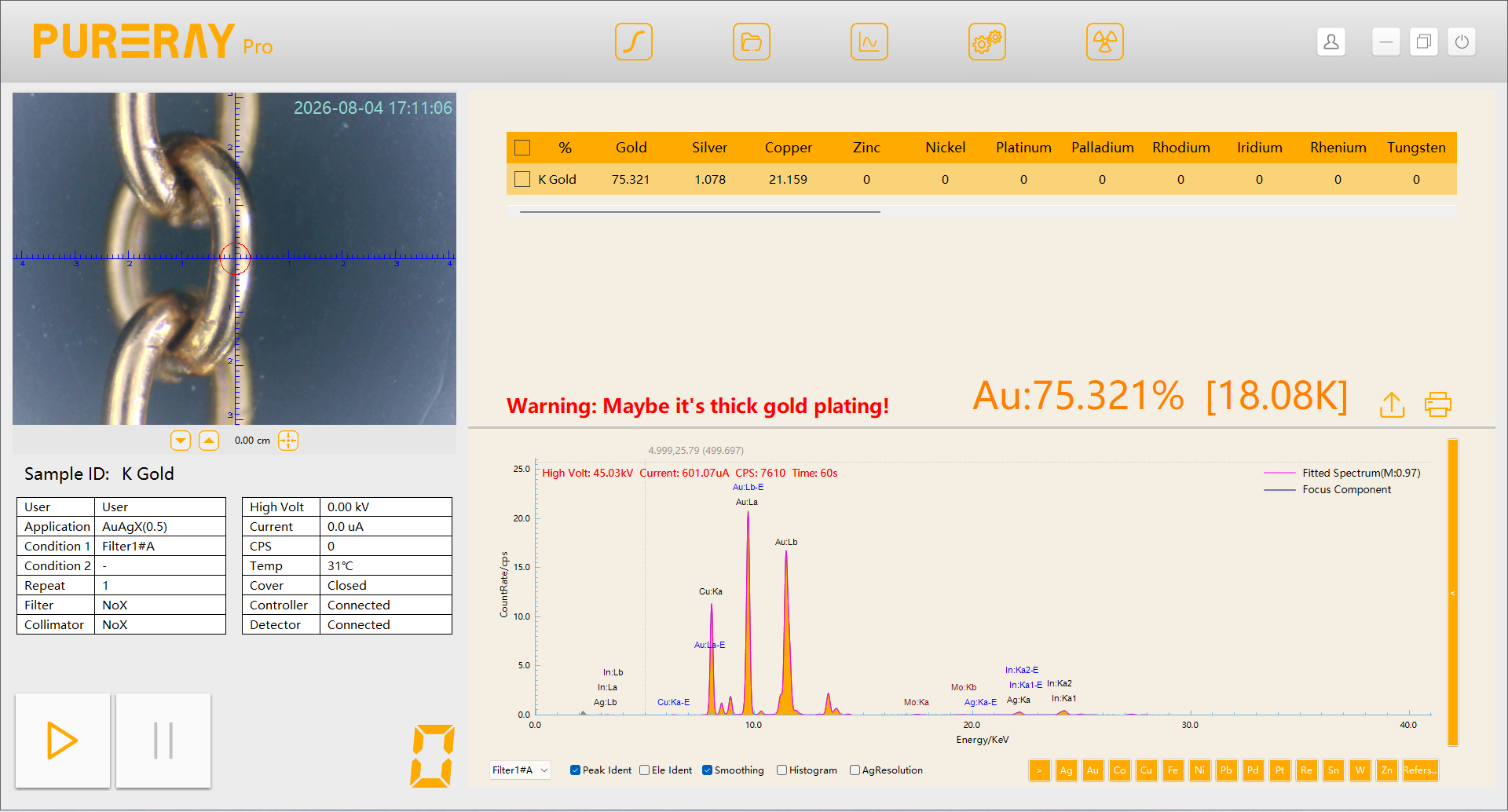
The results indicated an 18K gold composition at the sample surface, and the instrument issued a gold plating warning, suggesting a possible 18K gold surface layer over a lower-karat gold base material.
Spectrum Analysis
Based on the test results, the Pro generated the measured spectrum and compared it with the reference spectrum of genuine 18K gold. Under normal conditions, the measured spectrum of an 18K gold sample (orange curve) should closely match the reference spectrum (purple curve). However, when the surface composition differs from the underlying material, such as an 18K gold surface layer over a 14K gold base material, the measured spectrum will deviate from the reference spectrum, triggering the gold plating warning.
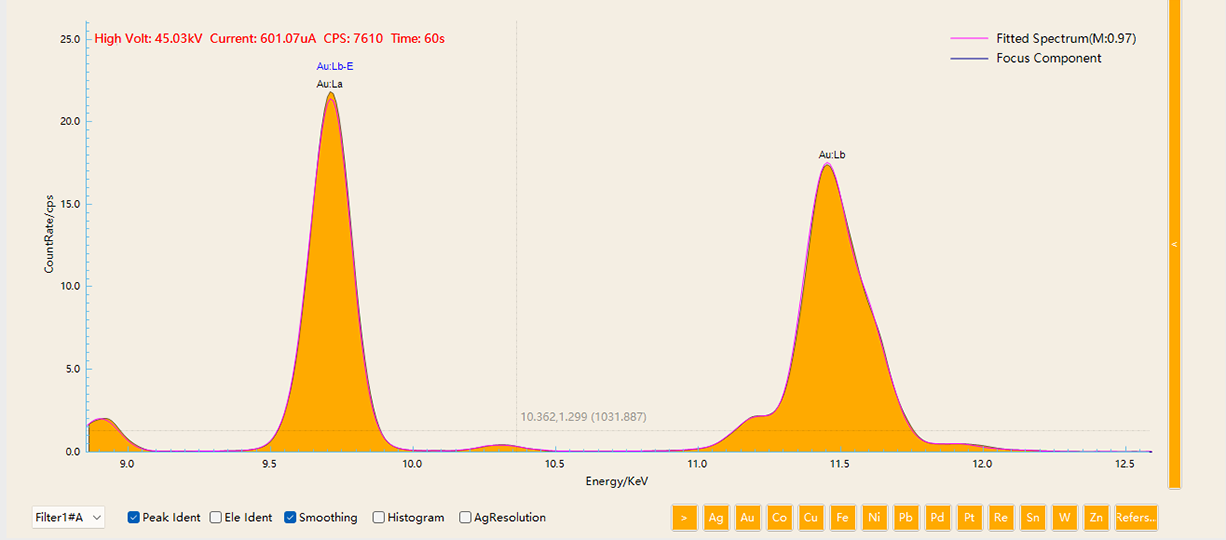
Au Peak
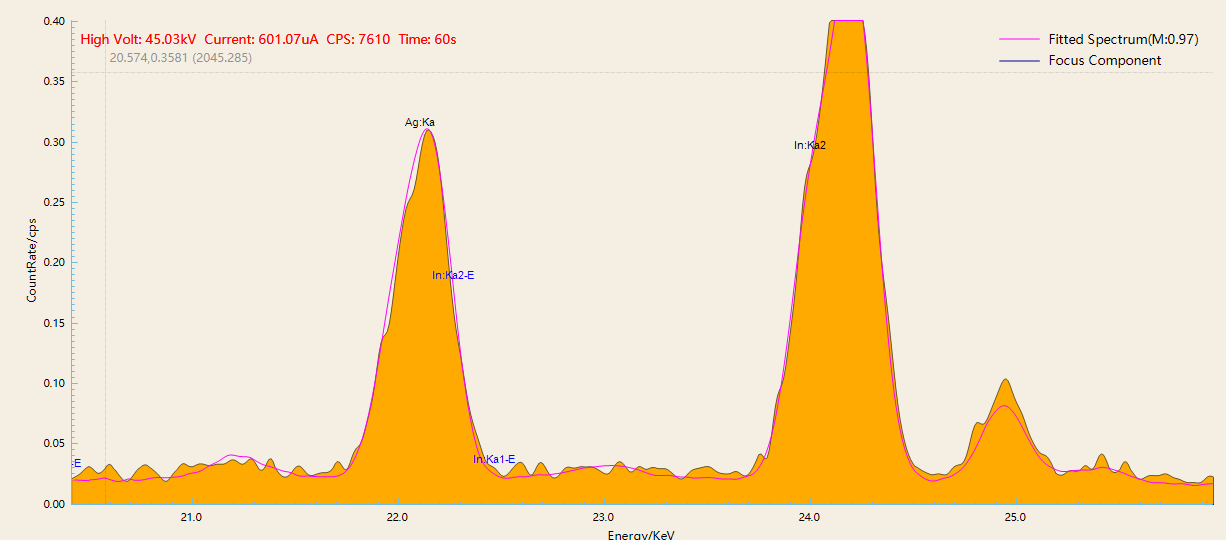
Ag Peak
Structure Confirmation
To further confirm the sample's actual structure, we used the Pro Plating Analysis function to determine the composition of both the surface layer and the underlying base material, as well as the thickness of the surface layer. Due to the small size of the necklace links, a 0.5mm collimator was selected to better match the measurement area and improve detection accuracy. The results confirmed an 18K gold plating layer over a 14K gold base material.
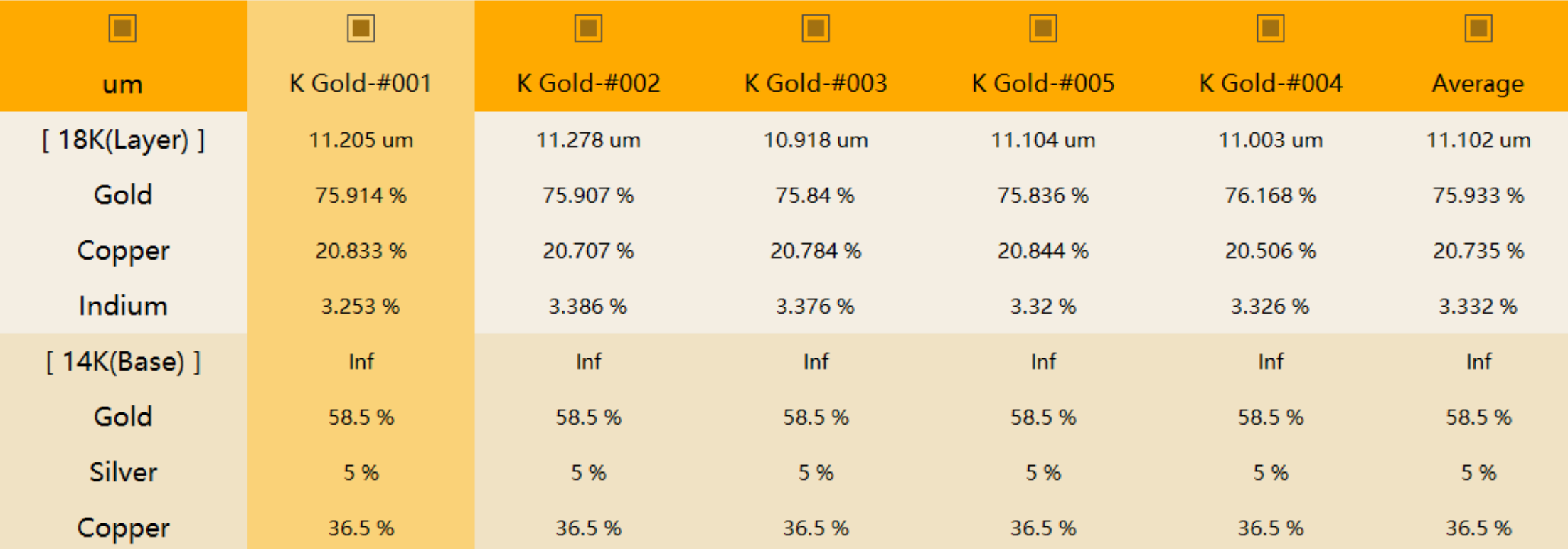
The results verified the accuracy of the Gold Plating Warning.
As cases of lower-karat gold being presented as higher-karat gold become increasingly common, XRF analyzers with plating detection capabilities can help inspectors identify layered structures and deliver more accurate and reliable results for jewelry retailers, recyclers, and testing laboratories.








Email:marketing@pureray.com
Tel:+852 55655728