



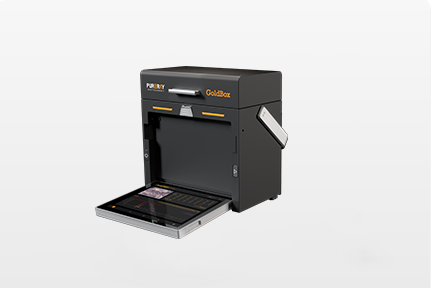


“False Rhenium, Real Germanium”: A New Risk in Gold Manufacturing
2025-11-25
 3700 549
1. Introduction: FP Ensures Scientific Accuracy, AI Enables Intelligent Efficiency
In the previous seven articles, we clarified the core strengths of the True FP Algorithm:
• It can forward-model spectra (structure → spectrum)
• It can invert spectra (spectrum → structure)
• It understands multi-layer coatings, alloy systems, and complex absorption effects
• It can infer the true structure of unknown/blind samples
FP has already brought XRF from"measuring peaks" into the era of understanding spectra.

Meanwhile, industry demands are evolving toward:
• more automation
• faster speed
• increasing sample complexity
• less manual parameter tuning
• Less dependence on expert operators
• automatic recognition of abnormal structures and fraud patterns
This leads to a natural requirement:
Can XRF become not only more accurate, but also faster, more automated, and more intelligent—without sacrificing scientific correctness?
The answer is FP + AI.
2. FP Is the Physical Engine; AI Serves as an Enhancement Module
✔ FP performs physical modeling and determines whether a structure is physically correct.
✔ AI performs pattern recognition to help FP become faster, more accurate and more automated.
AI does not replace FP.
AI does not make final judgments.

AI only assists FP by:
• providing better initial parameters
• narrowing the search space
• accelerating inversion
• identifying abnormal spectra
• helping the system learn over time
In short:
FP is the brain,and AI is the accelerator.
The future of XRF is not AI replacing FP, but AI amplifying FP.
3. Deployable FP+AI Architecture
To apply FP+AI in XRF, it must be clear which parts run locally and which run in the cloud.
(1) On-Instrument (Local) Execution
① FP Physical Inversion Engine (Core)

• forward calculation
• inverse solving
• multi-layer modeling
• full-spectrum residuals
• parameter optimization
• physical consistency checking
These must run locally because:
• real-time performance is required
• traceability is required
• computation must be bound to instrument hardware
• measurement data must not rely on external networks
② Lightweight AI models(Embedded )
These models are very small — only a few hundred KB — and require no GPU.
They include the following three types:
a. Layer Predictor

Uses shallow neural networks or XGBoost to recognize spectral features and output:
“Is this likely a 1-layer, 2-layer, or 3-layer structure?"
Purpose:
→ avoid FP blind-searching from 1 layer upward
→ start FP near the correct layer number
b. Initial-Guess Regressor
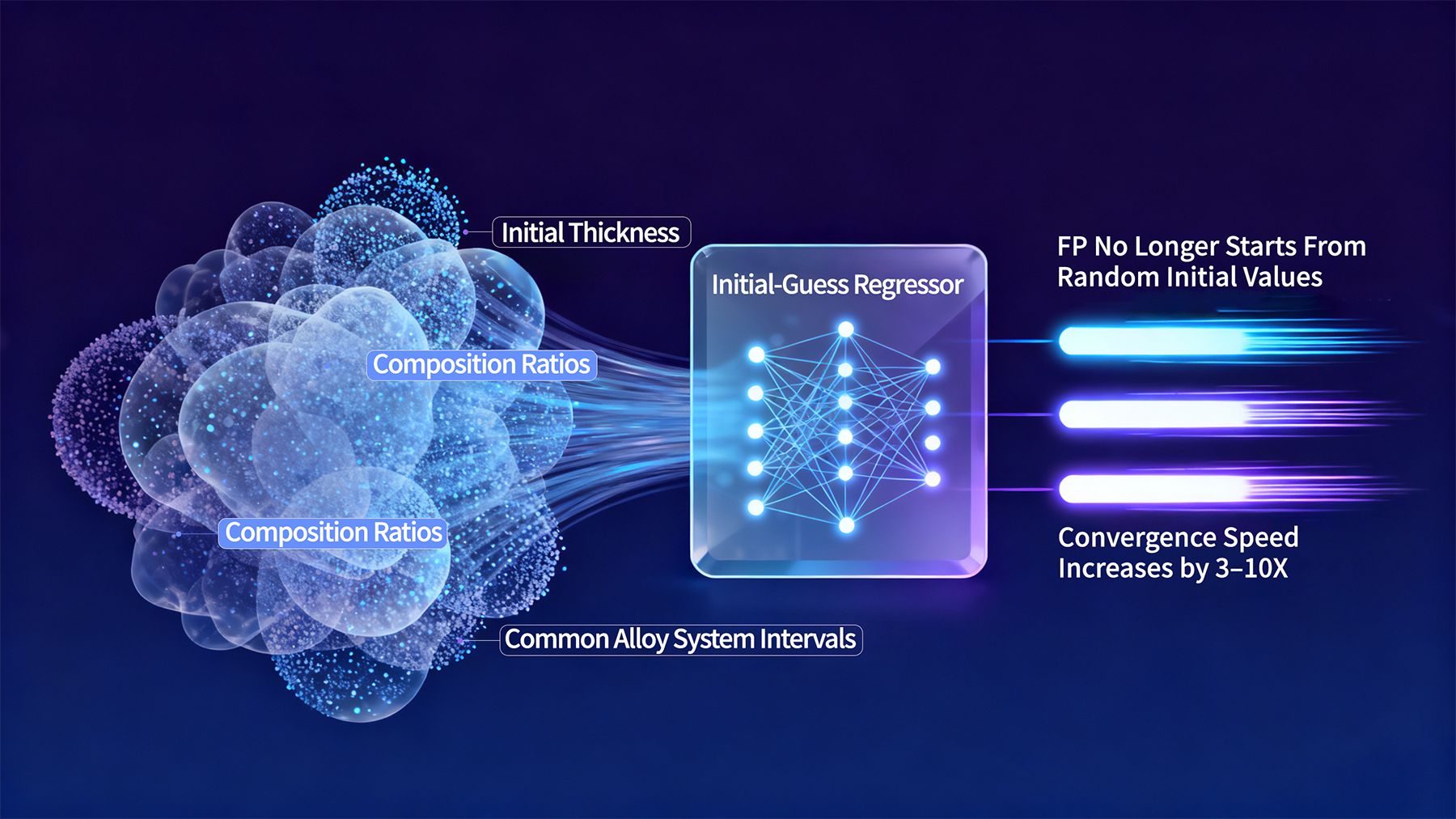
Learns from historical FP inversion data to estimate typical ranges of:
• initial thickness
• composition ratios
• common alloy system intervals
Purpose:
→ FP no longer starts from random initial values
→ convergence speed increases by 3–10X
c. Anomaly Detector
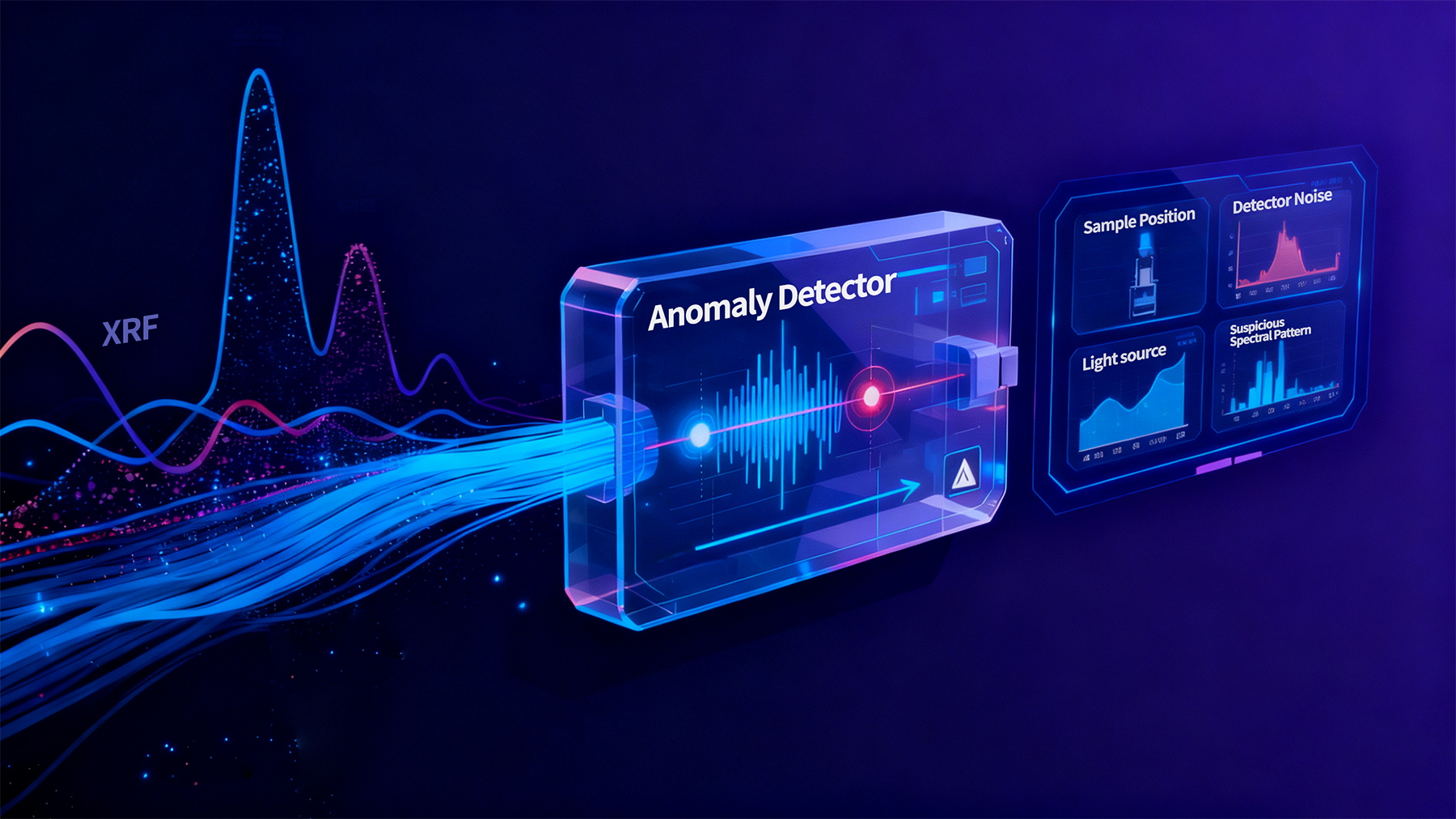
Used to determine:
• whether the sample is improperly positioned
• whether detector noise is too high
• whether the X-ray source has weakened
• whether suspicious spectral patterns appear (e.g., fake gold, treated gemstones)
Purpose:
→ avoid non-physical data in advance
→ improve the stability of FP inversion
(2) Cloud-Side Training (Not Involved in Real-Time Detection)

The cloud is suitable for:
• AI model training (based on large amounts of FP-inverted physical ground truth)
• model upgrading
• large-scale spectral clustering
• origin-estimation model training (gemstone direction)
• continuous expansion of the industry-wide"spectral knowledge base"
After training, updated AI weight files (within a few MB) are delivered to the instrument through software or firmware updates.
The cloud does not participate in real-time computation and does not affect the determinism of on-site detection.
4. How FP+AI Improves Precious Metal Alloy Detection
FP itself can already solve all computational problems for precious metal alloys (K-gold, Au–Cu, Au–Ag–Cu systems).
However, adding AI can significantly enhance overall performance.
(1) Intelligent Recognition of K-Gold Types (K-yellow / K-red / K-white)
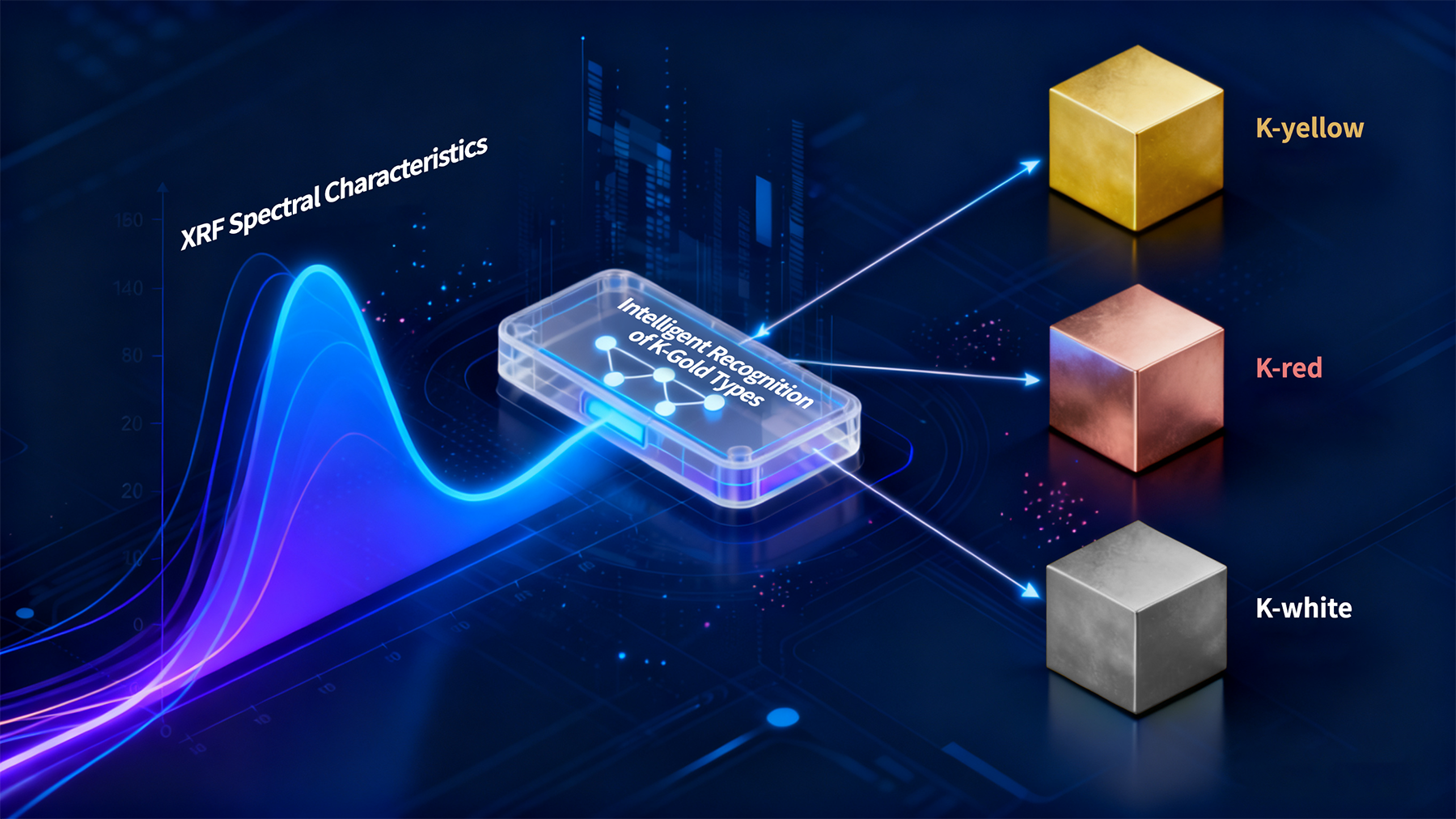
AI can recognize spectral characteristics such as:
• background slope
• Cu-to-Au ratio tendencies
• Pd/Ni absorption differences
Then it tells FP:
“This is likely K-white, more likely an Au–Pd–Ni alloy model."
This prevents FP from trying many possible models.
(2) Spectral Recognition of Fake Gold (Re / W / Sb / Ge / Bi)
FP can separate peaks, but AI can recognize the patterns, including:
• characteristic noise patterns of fake gold
• abnormal absorption tails of Re/W
• weak-peak patterns of Ge/Bi
• Sb/Bi combinations used for"weight adjustment"
Effect:
→ FP provides the true composition
→ AI provides the suspicion alert
(3) Recognition of Alloy Manufacturing Processes
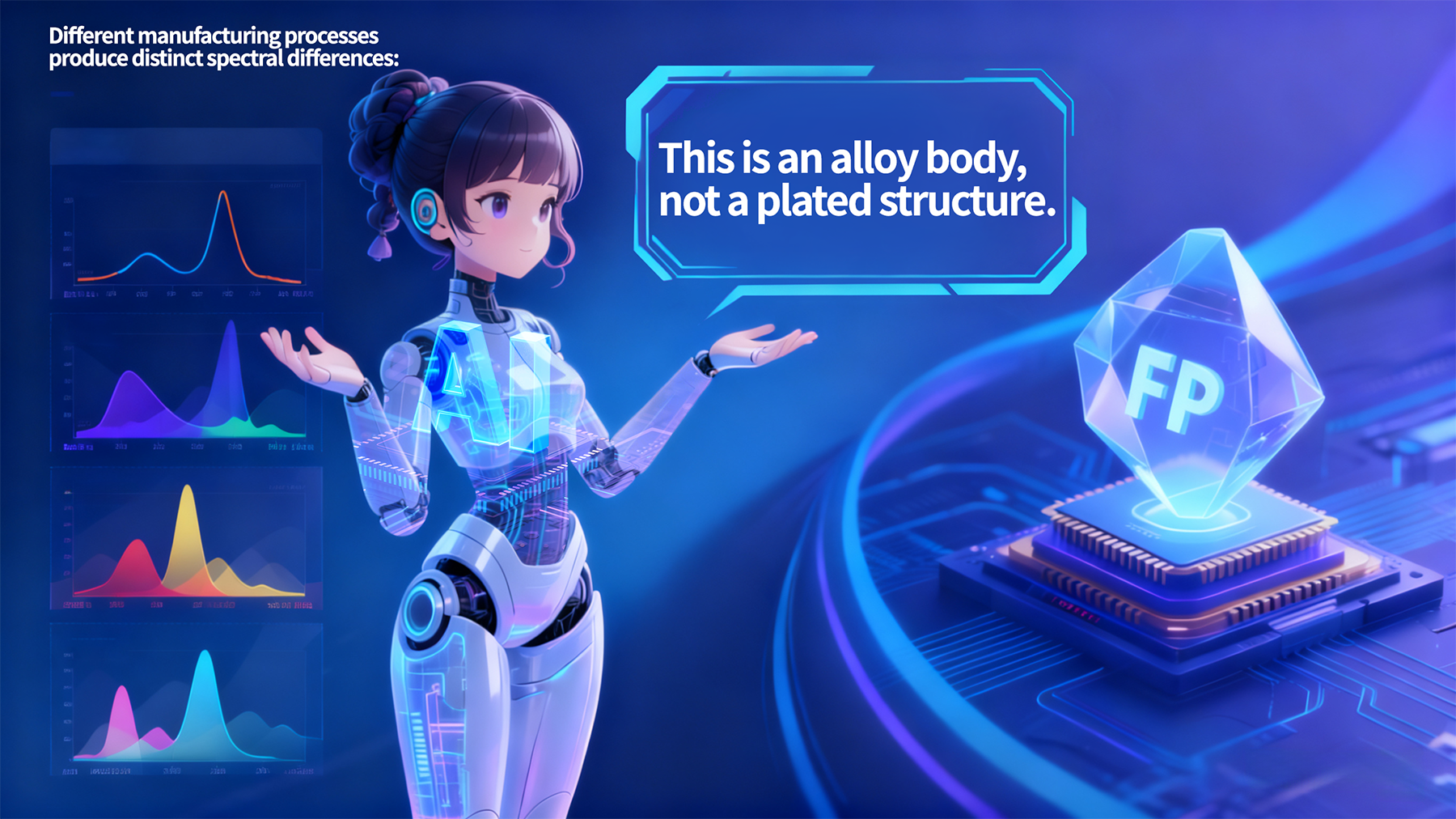
Different manufacturing processes produce distinct spectral differences:
• cast K-gold vs electroformed K-gold
• ancient-style gold vs modern hard gold
• 3D hard gold vs traditional metals
• diffusion K-gold vs single-alloy gold
AI can learn these patterns from large amounts of spectral data and help FP determine:
“This is an alloy body, not a plated structure."
This makes detection more automated and more intelligent.
5. The Future Role of FP+AI in Gemstone Detection
Gemstone analysis also benefits from the FP+AI architecture.
Why?
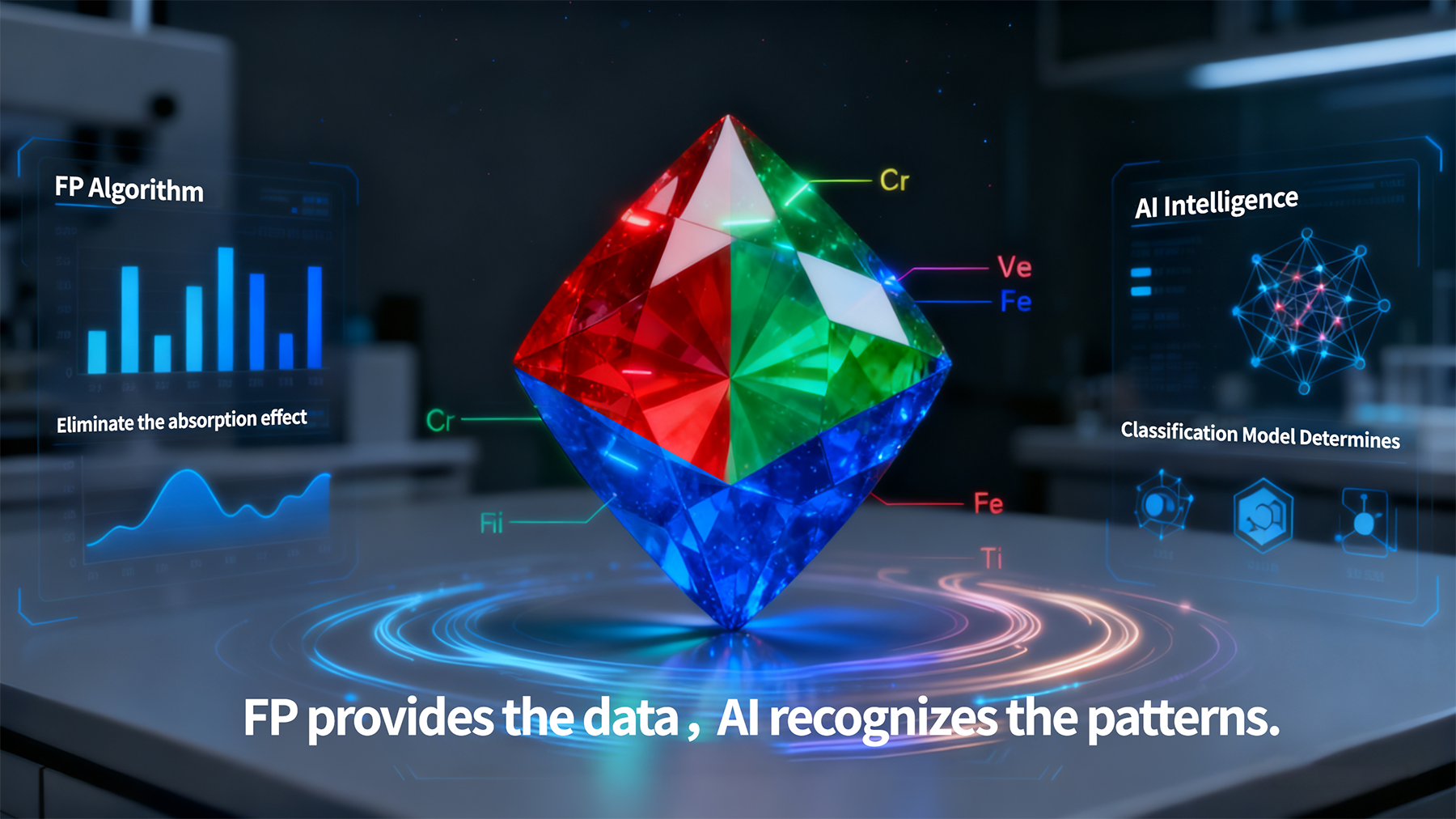
Because gemstone identification relies heavily on:
• trace elements (Cr, V, Fe, Ti, Ga, Mn, Ni)
• elemental ratios (e.g., Cr/V, Fe/Ti)
• origin-related characteristics (geological fingerprints)
• treatment indicators (heating, diffusion, filling)
Advantages of XRF:
• XRF can directly measure these chemical fingerprints.
• FP makes the chemical fingerprints more accurate (by removing absorption effects).
• AI recognizes the patterns within these fingerprints.
Therefore, FP+AI provides the following capabilities in gemstone detection:
(1) Natural vs Synthetic (AI Classification)
FP → provides accurate elemental compositions
AI → classification model determines:
• natural sapphire vs synthetic sapphire
• natural emerald vs hydrothermal emerald
• natural spinel vs synthetic spinel
(2) Origin Estimation (AI Clustering + FP Fingerprint Values)
FP provides accurate trace-element values.
AI performs clustering and confidence evaluation.
Applicable to:
• ruby (Myanmar / Thailand / Mozambique)
• sapphire (Sri Lanka / Madagascar)
• emerald (Colombia / Zambia)
(3) Treatment Identification (AI Recognizes"Treatment Signatures" )
Examples:
• diffusion-treated sapphire → increase in Ti
• fracture-filled emerald → presence of Pb, Ba
• irradiated topaz → increase in Ce
• HPHT diamond → presence of Ni, Co
FP provides the data; AI recognizes the patterns.
6. The Final Form of FP+AI: An Intelligent Reasoning-Based XRF System
Future XRF systems (especially for precious metals and gemstones) will be able to:
• automatically identify sample types
• automatically infer the number of layers
• automatically estimate initial parameter ranges
• automatically perform inversion (FP engine)
• automatically detect abnormal data
• automatically determine fake-gold characteristics
• automatically classify gemstones as natural or synthetic
• automatically estimate origin
• automatically calibrate instrument status
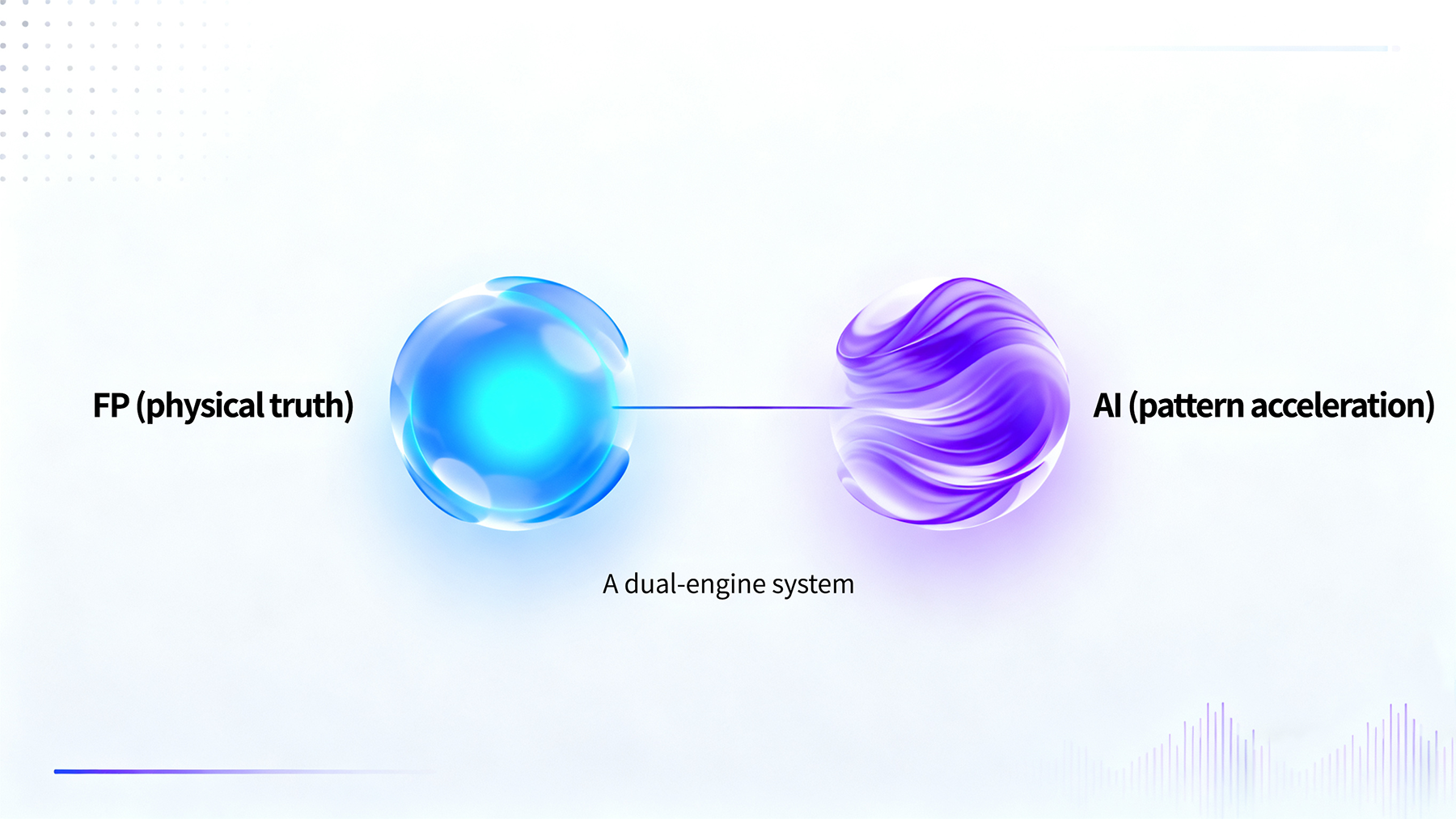
Eventually forming a dual-engine system of:
FP (physical truth) + AI (pattern acceleration).
This represents an"intelligent reasoning XRF" ,with the true ability to understand materials.
7. Conclusion: FP Provides Scientific Truth, AI Provides Scalability

• FP solves the question of whether it is physically true.
• AI solves the question of whether it can scale, automate, and become intelligent.
• FP + AI moves detection from manual reasoning to automatic reasoning.
The future detection system will be:
based on FP's physical modeling,
enhanced by AI-driven intelligent decision-making,
ultimately enabling XRF to learn, reason, and adapt.







Email:marketing@pureray.com
Tel:+852 55655728